The management of cardiac arrest during pregnancy presents unique challenges that demand specialised knowledge and swift action. Maternal cardiac arrest is a rare but high-stakes scenario that requires a comprehensive understanding of resuscitation techniques tailored to the pregnant patient.
Understanding the scope and risks
Cardiac arrest in pregnancy is rare, occurring in approximately 16 per 100,000 live births. The implications of resuscitation extend not only to the mother but also to the fetus, necessitating a delicate balance of interventions to optimise outcomes for both. It is widely recognised that the best means of optimising fetal outcome is by effectively resuscitating the mother.
Potential causes – The 4H’s and 4T’s
The following table summarises the potential causes of cardiac arrest specific to obstetrics:
| Hypoxia | Respiratory – pulmonary embolus, aspiration, failed intubation Heart failure Anaphylaxis Eclampsia / PET – pulmonary oedema, seizure |
| Hypovolaemia | Haemorrhage – obstetric (remember concealed), abnormal placentation, uterine rupture, atony, splenic artery/hepatic rupture, aneurysm rupture Cardiac – arrhythmia, myocardial infarction Distributive – sepsis, high regional block, anaphylaxis |
| Hypo/hyperkalaemia | Also consider blood sugar, sodium, calcium and magnesium levels |
| Hypothermia | |
| Tamponade | Aortic dissection Peripartum cardiomyopathy Trauma |
| Thrombosis | Amniotic fluid embolus Pulmonary embolus Myocardial infarction Air embolism |
| Toxins | Local anaesthesia Magnesium Illicit drugs |
| Tension pneumothorax | Entonox in pre-existing pneumothorax Trauma |
Preparation and prevention
Anticipating and promptly addressing potential risk factors can significantly mitigate the risk of cardiac arrest in pregnancy. Comprehensive prenatal care, recognition of warning signs, and early intervention in high-risk patients are essential.
Many of the cardiovascular problems associated with pregnancy are caused by compression of the inferior vena cava. In order to prevent decompensation or possible cardiac arrest in pregnancy, the distressed or compromised pregnant patient should be treated as follows:
- Place in the left lateral position or manually displace the uterus to the left
- Administer high-flow oxygen, guided by pulse oximetry
- Administer a fluid bolus if there is hypotension or evidence of hypovolaemia
- Immediately re-evaluate the need for any drugs currently being given
- Seek expert help and involve obstetric and neonatal specialists early
- Identify and treat the underlying cause
Cardiac arrest modifications in pregnancy
In the event of cardiac arrest in pregnancy, in addition to all the principles of basic and advanced life support, the following modifications should be made:
- Summon expert help immediately – including an obstetrician, anaesthetist, and a neonatalogist.
- Start CPR according to the standard ALS guidelines, but the hand position may need to be modified and placed slightly higher on the sternum.
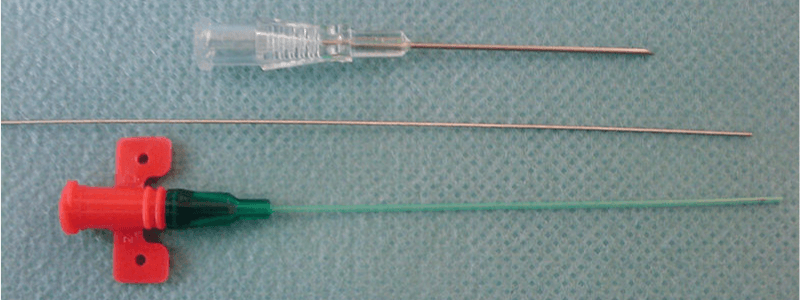
- The potential for IVC compression suggests that IV or IO access should ideally be established above the diaphragm.
- The uterus should be manually displaced to the left to remove caval compression
- The table should be put in a left lateral tilt (ideally 15-30 degrees of tilt)
- Early tracheal intubation should be performed to reduce aspiration risk (expert anaesthetic assistance should be sought)
- Start preparing for an emergency Caesarean section
Peri-mortem Caesarean section
Peri-mortem Caesarean section should be performed within 5 minutes of the onset of the cardiac arrest if > 20 weeks gestation, and there is no return of spontaneous circulation. This has been shown to improve maternal outcomes. Delivery will relieve caval compression and improve the likelihood of successful resuscitation by permitting an increase in venous return during the CPR attempt. It will also maximise the chances of the infant’s survival as the best survival rate occurs when delivery is achieved within 5 minutes of the onset of the mother’s cardiac arrest.
Post resuscitation from haemorrhage
Following resuscitation from haemorrhage, the Massive Haemorrhage Protocol should be activated. Consider the use of uterotonic drugs, fibrinogen and tranexamic acid. Uterine tamponade/sutures, aortic compression and hysterectomy may be necessary.
Header image used on licence from Shutterstock.